

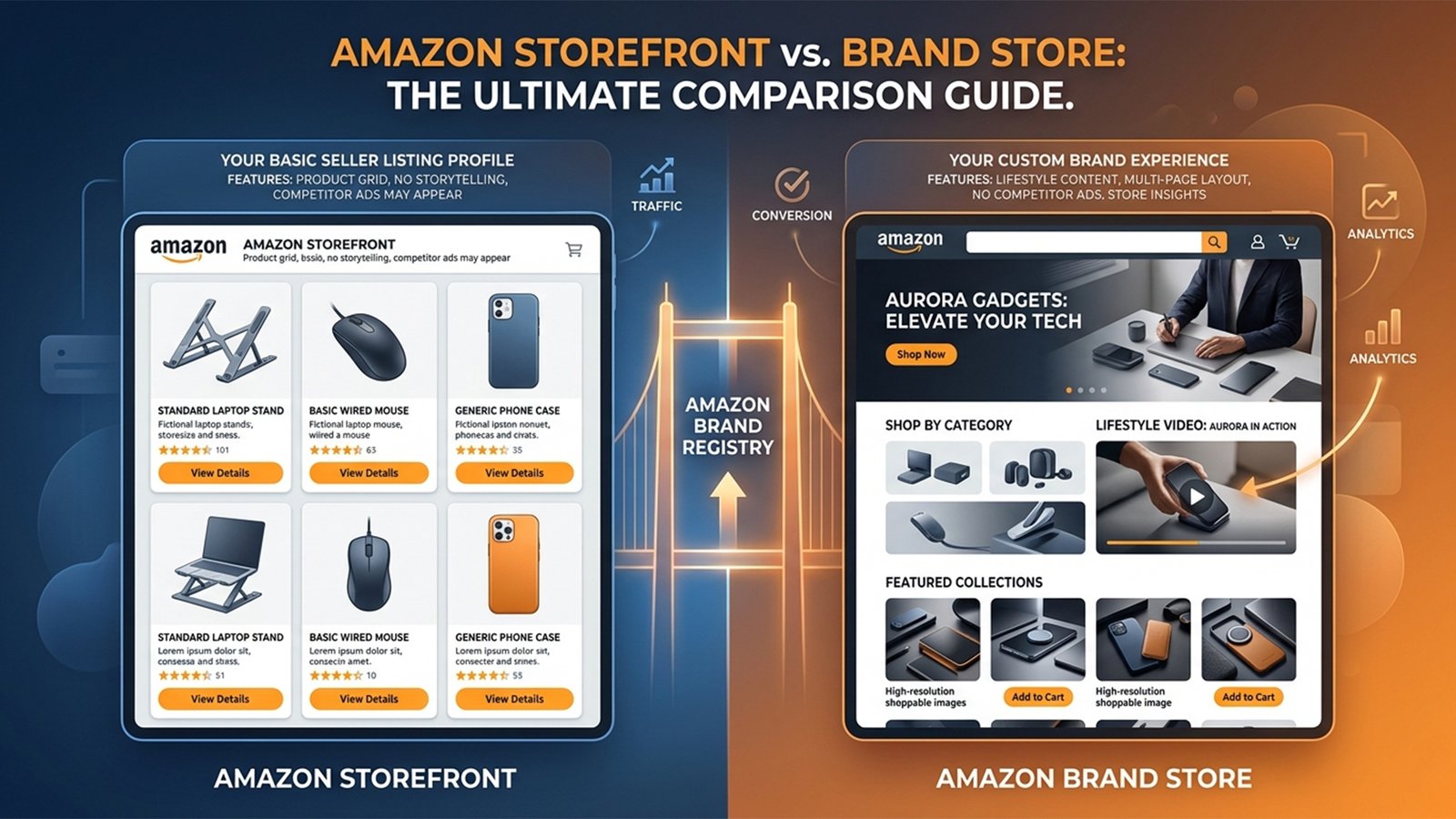
Navigating the world of Amazon selling demands far more than uploading a few product listings and waiting for sales. With over six million third-party sellers competing for attention on the world’s largest e-commerce marketplace, success depends on using every available tool with precision. Two of the most powerful, and most frequently confused, are the Amazon storefront and the Amazon brand store.
Despite frequent interchangeable use, both platforms serve fundamentally different purposes within the online retail ecosystem. Treating both tools as the same costs brands valuable traffic generation opportunities, dilutes brand visibility, and undermines consumer trust. A precise understanding of each platform unlocks stronger shopper engagement, broader market reach, and measurable improvements in conversion rates.
The guide below breaks down both platforms, surfaces the latest 2026 updates from Amazon Ads, and outlines actionable strategies to maximize impact.
Defining the Amazon Storefront
Commonly referred to as the Seller Profile Page, an Amazon storefront is the default, automatically generated page assigned to every seller on the platform. Shoppers access the storefront by clicking the “Sold by” link located near the buy box on a product detail page.
Key elements visible on an Amazon storefront include:
- All product listings under the seller’s account, sorted by sales velocity
- Seller ratings and customer reviews
- Business information covering shipping, returns, and tax policies
- A short brand introduction and FAQ section
- Optional custom help pages, gift services, and credentials
Customization remains minimal, and the storefront cannot be redesigned beyond the fields available within Seller Central. Nevertheless, the page functions as free real estate offered by Amazon to every registered seller, contributing to transparency, professionalism, and baseline consumer trust.
Defining the Amazon Brand Store
An Amazon brand store is a fully customizable, multi-page destination available exclusively to brands enrolled in Amazon Brand Registry. Launched in current form around 2017 and continuously expanded since, the brand store operates like a dedicated mini-website hosted natively within the Amazon ecosystem.
Defining characteristics of an Amazon brand store include:
- Drag-and-drop modules (tiles) for flexible layouts
- Multiple subpages organized by product category, collection, or season
- Custom header images, embedded videos, and shoppable lifestyle visuals
- A competitor-ad-free environment
- A unique vanity URL (amazon.com/BrandName) for off-platform promotion
- A robust analytics dashboard called Store Insights
- Native integration with Sponsored Brands, Sponsored Display, and Amazon DSP
According to Amazon internal data referenced in recent industry reporting, high-quality brand stores generated up to 97% more sales compared to low-quality stores during measurement periods in 2025. Brands using premium storefront design also saw a 31% higher New-to-Brand sales rate compared to those relying on basic, unoptimized templates.
How to Locate Each Page on Amazon
Finding an Amazon Storefront
On any product detail page, the “Sold by” line appears near the buy box. Clicking the linked seller name opens the Seller Profile, where a hyperlinked phrase (“Visit the [Brand Name] Storefront”) leads to the full storefront. From there, filtering options allow shoppers to browse by price, newest arrivals, average customer review, or best sellers.
Finding an Amazon Brand Store
The product detail page also displays a separate linked phrase directly under the product title: “Visit the [Brand Name] Store.” Clicking the link opens the brand store, often beginning with a curated hero banner and category navigation customized by the brand.
Recognizing the visual and functional difference between these two entry points helps clarify how Amazon segments seller credibility from brand storytelling.
Optimizing the Amazon Storefront for Credibility
Although customization remains restricted, smart optimization of the Seller Profile Page strengthens credibility and supports overall Amazon selling success. Shoppers often visit the page before completing a purchase to evaluate seller reliability, so professional presentation pays dividends.
Editing the Seller Profile
Inside Seller Central, navigate to Settings, then to Your Info & Policies, and finally to the Profile tab. The following fields deserve attention:
About the Business (up to 20,000 characters): Use the space to share brand origins, mission, and values. Storytelling builds emotional connection and reinforces consumer trust.
Seller Logo and Profile Logo: Upload high-resolution, on-brand visuals following Amazon’s strict specifications. The seller logo must be JPG, JPEG, or GIF at 120×30 pixels and under 20,000 bytes. The profile logo accepts PNG, JPG, or GIF at a minimum of 150×150 pixels and under 10 MB.
Business Details: Disclose primary business activity, year established, annual revenue, employee count, and diverse business identity options where appropriate. Categories such as Asian-owned, Black-owned, Veteran-owned, and Women-owned receive distinct visibility in B2B searches through Amazon Business.
Policies and Customer Support: Detail shipping rates, return windows, gift services, tax handling, FAQs, and custom help pages. Transparent policies reduce friction during checkout and elevate overall customer experience.
Why Storefront Optimization Matters
A well-built Seller Profile Page reinforces brand visibility within search results, encourages positive reviews, and reduces inbound customer service inquiries. Even without advanced storefront design, sellers strengthen credibility through transparency, professional formatting, and prompt engagement with reviews and questions. For smaller sellers without Brand Registry access, an optimized Amazon storefront represents the most accessible path to differentiation and consumer trust.
Optimizing the Amazon Brand Store for Conversion
For brands enrolled in Brand Registry, the Amazon brand store delivers unmatched control over presentation, narrative, and product promotion. Effective optimization combines creative excellence with disciplined use of analytics.
Why Invest in a Brand Store
Several distinct advantages justify the investment:
- Centralized brand destination. All product listings live under a single cohesive umbrella, reinforcing identity and simplifying navigation across the catalog.
- Ad-free environment. Competitor ads never appear, ensuring undivided shopper engagement with brand offerings.
- Higher conversion rates. Uninterrupted browsing experiences correlate with stronger purchasing intent.
- Direct traffic generation. A unique vanity URL enables promotion through social media campaigns, email newsletters, influencer partnerships, and other digital marketing channels.
- Off-Amazon attribution. Amazon Attribution tags track non-Amazon traffic impact, sharpening sales strategy decisions across paid and organic touchpoints.
Best Practices for Brand Store Design
Compelling Header: The hero banner sets the first impression. Strong storefront design uses an evocative lifestyle image, clear messaging, and on-brand typography across desktop and mobile views.
Subpages for Categories: Just as a traditional online retail website organizes products by category, a brand store benefits from dedicated subpages for collections, seasonal promotions, or signature product lines. Such structure mimics a familiar shopping flow and improves dwell time.
Rich Media Integration: Videos demonstrating products, unboxing sequences, or behind-the-scenes brand moments deepen shopper engagement. Shoppable images allow customers to tap directly on lifestyle visuals to surface featured ASINs without leaving the page.
Mobile Optimization: More than half of Amazon shoppers browse on mobile devices. Both desktop and mobile previews require testing before submitting for publishing approval.
Keyword Optimization: Meta descriptions and section copy should incorporate relevant search terms naturally. Disciplined keyword optimization improves discoverability both inside Amazon and through external search engines, expanding overall market reach.
Legibility and Accessibility: Text overlays on images must remain readable across all screen sizes. Amazon reviewers frequently reject submissions failing clarity or accessibility standards.
Vanity URL: A custom URL matching the brand name simplifies off-platform promotion. Sharing amazon.com/BrandName across Instagram bios, TikTok captions, email signatures, and influencer collaborations strengthens cross-channel cohesion.
Brand Store Analytics: 2026 Updates Worth Knowing
Amazon has dramatically expanded brand store analytics over the past two years, transforming the Store Insights dashboard from a basic traffic report into a full-fledged measurement suite.
In February 2024, three new metrics joined the dashboard: average bounce rate, average dwell time, and new-to-store visitors. In November 2025, Amazon added a Brand Store page views metric specifically tied to Sponsored Brands campaigns, allowing advertisers to quantify the lift from native advertising tools.
The most significant update arrived on January 16, 2026, when Amazon launched section-level shopper engagement insights in beta across 29 markets, including the United States, Canada, the United Kingdom, Germany, France, Brazil, India, and Japan. The new Sectional Performance tab inside the Brand Store insights dashboard delivers four metrics for every individual section of the store: renders, viewable impressions, clicks, and click-through rate. Filtering by traffic source reveals exactly how Sponsored Brands ads, Amazon DSP campaigns, and organic search shoppers interact differently with each section.
The implications for sales strategy are substantial. Sections with high renders but low clicks reveal messaging or imagery problems. Sections with strong click-through rates but weak downstream purchases point to disconnects between the brand store and linked product detail pages. Such granular data converts the brand store from a creative asset into a measurable, A/B-testable landing page.
Driving Traffic to Either Platform
Once a brand store goes live, traffic generation becomes the central priority. Several channels work effectively in combination:
- Sponsored Brands and Sponsored Display campaigns offer native Amazon advertising tools directing shoppers to specific brand store pages.
- Amazon DSP enables programmatic display advertising across audiences both on and off Amazon.
- Social media campaigns built around the vanity URL push branded content across Instagram, TikTok, Pinterest, and Facebook.
- Email marketing integrates brand store links into newsletters, abandoned-cart sequences, and post-purchase nurture flows.
- Influencer collaborations expose the brand store to engaged niche audiences.
Tagging every external touchpoint with Amazon Attribution tracks clicks, page views, and purchases by source, sharpening digital marketing investment decisions over time.
Common Challenges and Practical Fixes
Submission Rejections
Amazon reviews every brand store before publishing. Common rejection reasons include illegible text on images, broken product links, missing alt text, or violation of content guidelines. Adjusting font sizes, replacing low-resolution visuals, and verifying every product link resolves the majority of issues during resubmission.
Linking and ASIN Mapping Issues
Ensure product pages link correctly through accurate UPC or EAN codes entered in the GTIN field. Mismatched identifiers prevent ASINs from displaying within brand store modules, frustrating shoppers and reducing conversion.
Slow Discoverability After Launch
A new brand store rarely generates organic traffic immediately. Launching Sponsored Brands campaigns, refining keyword optimization in meta descriptions, sharing the vanity URL externally, and pursuing earned media all accelerate visibility during the early stages.
Measuring Performance: Metrics That Matter
Whether managing an Amazon storefront or an Amazon brand store, performance tracking shapes future merchandising and advertising decisions. Key metrics include:
- Unique visitors: Distinct shoppers reaching the page within a given window.
- Page views per visit: Indicator of engagement depth and navigation quality.
- Sales and orders: Direct revenue attribution at the page and ASIN level.
- Dwell time and bounce rate: Signals of content quality and relevance.
- Section-level click-through rate (new in 2026): Performance of individual storefront modules.
- Traffic source breakdown: Insight into whether shoppers arrive through organic search, Sponsored Brands, or external campaigns.
Pairing Store Insights with Amazon Brand Analytics, a separate Brand Registry tool covering customer search behavior and market basket data, creates a comprehensive view of brand performance across the entire shopper journey.
Choosing the Right Tool for the Right Business
The decision between focusing on the Amazon storefront or investing fully in the Amazon brand store depends on business stage, brand maturity, and resource availability.
For smaller sellers without a registered trademark: Optimizing the Seller Profile Page builds immediate credibility and supports baseline product promotion. The Amazon storefront serves as free real estate for displaying product listings, expressing brand values, and earning early consumer trust.
For established brands with trademark protection: The Amazon brand store unlocks advanced storefront design, granular analytics, custom URLs, and seamless integration with advertising tools. Brand Registry enrollment opens the door to richer brand visibility, deeper shopper engagement, and stronger long-term market reach.
For most growing brands, the strategic answer involves both: maintaining a polished Seller Profile while building a high-conversion brand store as the centerpiece of Amazon selling efforts. Both surfaces work in tandem to convert curiosity into loyalty.
Conclusion!
The Amazon storefront and the Amazon brand store represent two distinct yet complementary pillars of e-commerce success on Amazon. The storefront delivers a foundational layer of professionalism for every seller, while the brand store offers an immersive, fully branded environment for those ready to invest in long-term equity and differentiated customer experience.
In 2026, with section-level analytics, expanded engagement metrics, increasingly sophisticated advertising tools, and ever-more competitive marketplace dynamics, brands mastering both surfaces position themselves for sustainable growth. Thoughtful storefront design, disciplined keyword optimization, consistent product promotion, and data-informed refinement create the kind of online retail experience that converts casual browsers into loyal repeat buyers while elevating brand visibility across the entire Amazon ecosystem.
For brands serious about scaling Amazon selling, the question is no longer whether to optimize both platforms, but how quickly to begin.