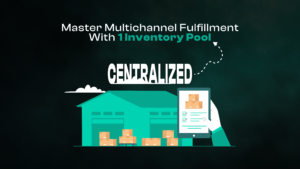

Amazon is the biggest single channel in US ecommerce, and it still accounts for only about 36 percent of it as of early 2026, according to Marketplace Pulse. That leaves close to two thirds of online spending happening on Walmart, on TikTok Shop, and on brands’ own sites. That math is the case for selling across channels. The trap is running each channel as its own island, with stock split into separate piles that run out on one platform while sitting idle on another. Multichannel fulfillment solves that by working from one inventory pool, and getting it right is one of the highest-leverage moves in ecommerce inventory management.
The real cost of fragmented stock
Split inventory looks organized and quietly costs you. When each channel holds its own stock, you oversell in one place, strand units in another, and lose a clear view of true demand across the business. Multichannel fulfillment exists to close that gap.
The scale of the problem is measurable. IHL Group puts the global cost of inventory distortion, the combined toll of out-of-stocks and overstocks, at $1.77 trillion in 2025, with out-of-stocks alone accounting for $1.2 trillion. That is roughly 6.5 percent of global retail sales walking out the door, much of it traced to systems and process rather than demand. Sharper inventory management is how you keep your share of that on the right side of the ledger, and a single stock position is where the work starts.
What multichannel fulfillment looks like
Multichannel fulfillment means your stock lives in one place and ships from there no matter where the order comes from. Amazon Multi-Channel Fulfillment, or MCF, is the most common engine for this. You send inventory to one location, Amazon distributes it across its network, and orders from your Shopify store, eBay, and other channels get picked, packed, and shipped from the same pool that serves Amazon. For your team, that means inventory management happens in one system instead of many.
The scale is real. Amazon has reported that MCF serves more than 200,000 US sellers, with off-Amazon orders fulfilled through it up 70 percent year over year. Consolidating into one pool is exactly the kind of move IHL ties to lower distortion, because a single, accurate view of stock is what keeps popular items available and capital out of dead inventory. That is inventory management working as an advantage rather than an afterthought.
Amazon, Walmart, and your own site
The point of a single pool is that one stock position serves Amazon, Walmart, and your own site at once. For your direct-to-consumer store, MCF offers unbranded packaging, so orders arrive without another marketplace’s logo on the box and your brand stays front and center. Walmart Marketplace earns a place on its own merits, growing fast and reaching a different shopper, and Walmart Fulfillment Services gives you a parallel engine there.
The operator’s move is to decide which fulfillment engine carries which channel, so one inventory management strategy covers all of them instead of three disconnected systems fighting over the same units. That is what mature multichannel fulfillment really is: one plan, many surfaces.
The tradeoffs worth watching
Multichannel fulfillment simplifies the work, and one pool still hides a few things worth watching. Shared inventory can create a false sense of security. Fewer stockouts and cleaner dashboards can mask the fact that one channel is absorbing the highest fee burden while another consumes your best units. Inventory efficiency should trigger deeper analysis, not end it, and that is where disciplined inventory management earns its keep.
The economics on the back end deserve the same attention. IHL Group reports that the global value of returned goods has reached $1.9 trillion, and that for 91 percent of retailers the cost of returns is now growing faster than sales, with processing costs up 40 percent since 2020. A pool that ships cleanly across channels still needs a plan for what comes back, so complete inventory management has to cover returns, not just outbound orders. The brand experience of that return journey is a real decision too. MCF’s unbranded box keeps costs down, while a dedicated 3PL gives you branded packaging and inserts. Good multichannel fulfillment accounts for both, and the right answer depends on where each order is going and what that customer is worth.
What good looks like
Strong multichannel fulfillment runs on a few disciplines. Sync inventory before you list on a new platform, so availability is accurate from day one. Automate reorder triggers to hold safety stock across channels. Reconcile weekly to catch quantity mismatches and stranded units early. Treat inventory management as an operating rhythm, not a quarterly cleanup.
Done well, inventory management stops being a source of firefighting and becomes a feedback loop you can trust, one that keeps every channel in stock while freeing up the cash that used to sit in stock you could not see.
The operator takeaway
At Treszon, we run one inventory pool and manage the economics channel by channel, because we operate every brand we run like we own it. Multichannel fulfillment is about building one clear inventory position that serves Amazon, Walmart, and your own store, and knowing the true cost of every order that leaves it, and every order that comes back. The brands that master that stay in stock, protect their margin, and grow on every surface at once.